
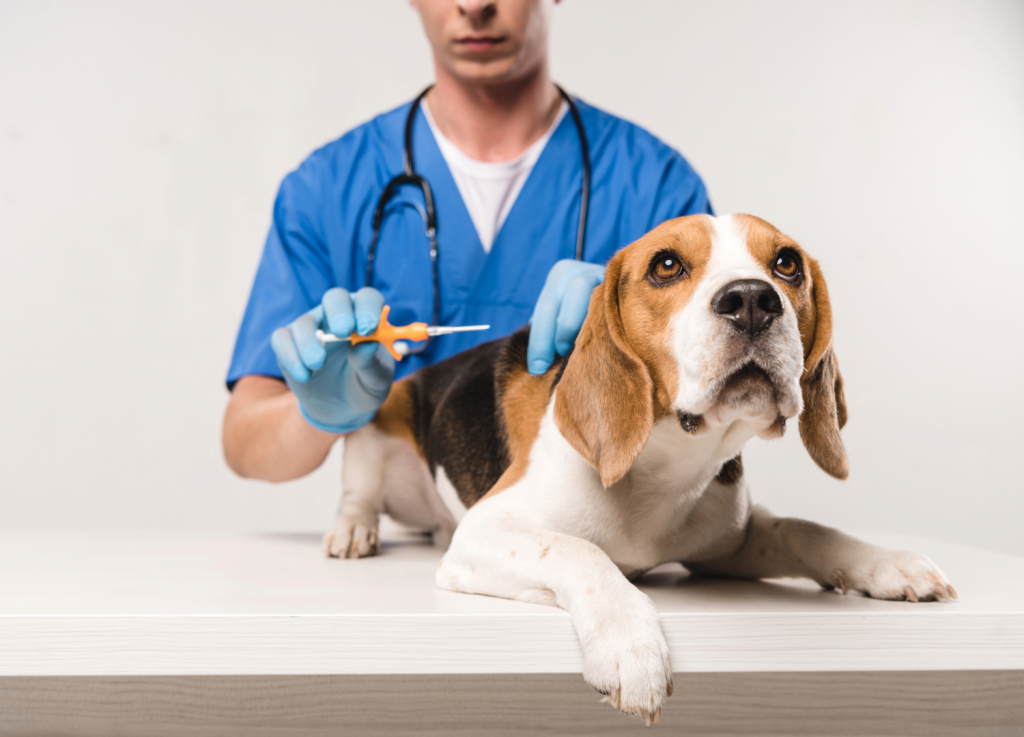
Microchip identification, if registered, is the most reliable way to reunite lost pets with their owners and provide peace of mind.
Microchip identification helps return an estimated 8,000 lost cats, dogs, and other animals to their homes every day. Having identification and contact information attached to your pet’s collar makes it more likely that you will be reunited with your pet if he or she is lost. However, collars and tags can break or become unreadable. In order to improve your pet’s chances of returning home, if lost, we recommend microchipping.
A microchip is about the size of a grain of rice. It is encased in a smooth, strong, biocompatible glass and is small enough to fit into a hypodermic needle. There is virtually no chance of the body developing an allergy or trying to reject the microchip. It is inserted under the skin between the shoulder blades with a needle. The pain from having the microchip inserted can be compared to the pain from having a vaccine injection. The chip is permanent, lasting the whole life of the pet. After being microchipped, your pet needs to be registered in a pet recovery database, which helps reunite lost pets with their families.
If a pet is found, all animal care facilities (shelters, hospitals, etc.) will scan the pet for a microchip using a special microchip reader that is simply waved over the skin. Once a microchip is found, a special hotline is called, and the lost pet is reported. The pet owner is then called immediately and given the contact information about where to pick up their pet Looking for your pet? Click here to access the Universal Pet Microchip Lookup.
The procedure is safe, easy and inexpensive. A study published in the Journal of the American Veterinary Medical Association, included statistics from 53 animal shelters across the U.S.:
Some owners feel that their pet doesn’t need identification because they stay indoors, but in our experience, these are the most likely to become lost when they accidentally get outside. As separation from your cat or dog can happen all too easily, permanent identification by microchipping is critical. Every pet should have microchip identification as the procedure can be done at any age.