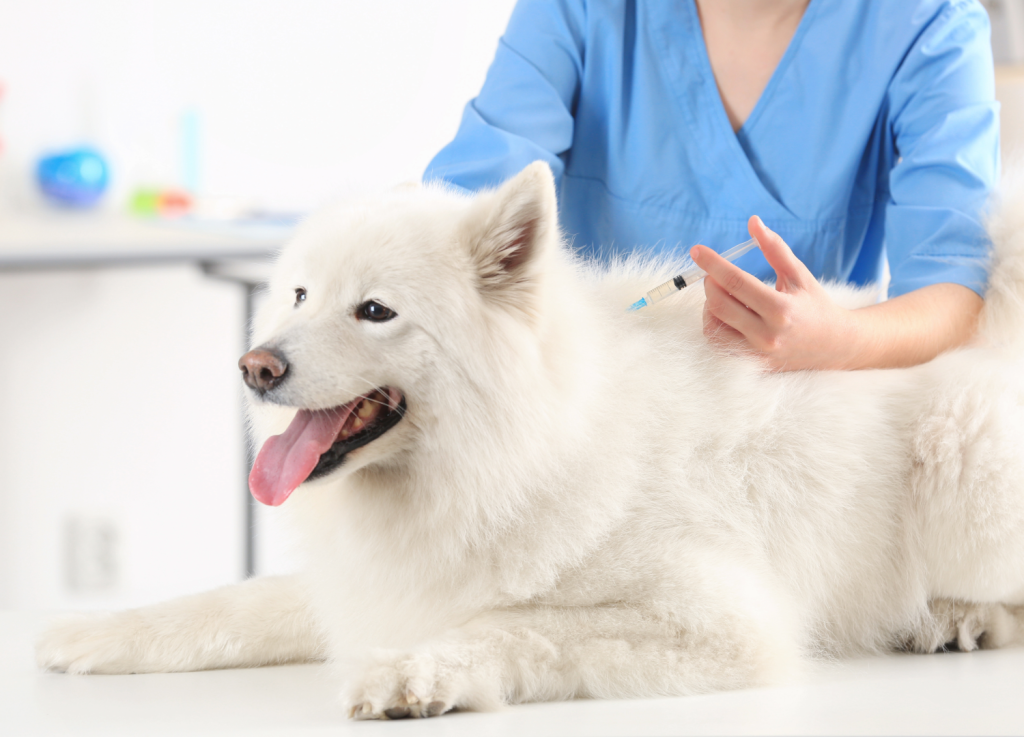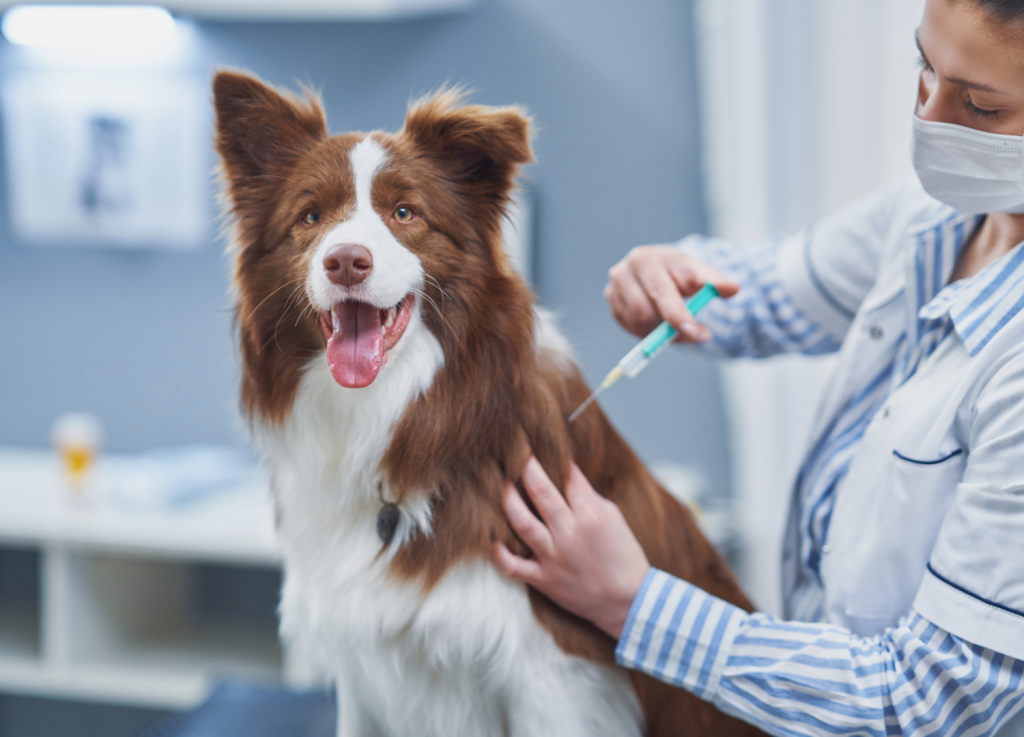
Preventative care is an important aspect in maintaining your pet’s optimum health. Proper vaccination is vital in protecting them against harmful diseases.
We believe that preventative care is one of the most important aspects of maintaining your pet’s health. There are a variety of diseases that affect animals, so adequate vaccination of your pet is important in protecting them from the many types of illnesses to which they are susceptible to.
Vaccinations are vital to the health and protection of your pet and serve as a preventative measure in combating viral diseases like Distemper, Parvovirus, Parainfluenza, Lyme, Panleukopenia, Feline Leukemia virus, Rabies and others. They help to combat diseases by exposing the pet’s immune system to inactive or small amounts of a particular form of bacteria or virus.
Vaccinations are particularly important for puppies, kittens, and other young animals that have immature immune systems. Veterinary vaccinations generally begin at 6-8 weeks of age and then boostered throughout your pet’s life depending on the vaccine. Our doctors will determine the appropriate vaccination plan for your pet.
Vaccines are administered through a subcutaneous injection (under the skin), orally, or intra-nasally, depending on the vaccine. They are accompanied by a consultation and examination with our Veterinarians to make certain that your pet’s condition is stable enough to receive them. Proper and timely administration is necessary to ensure optimal protection.
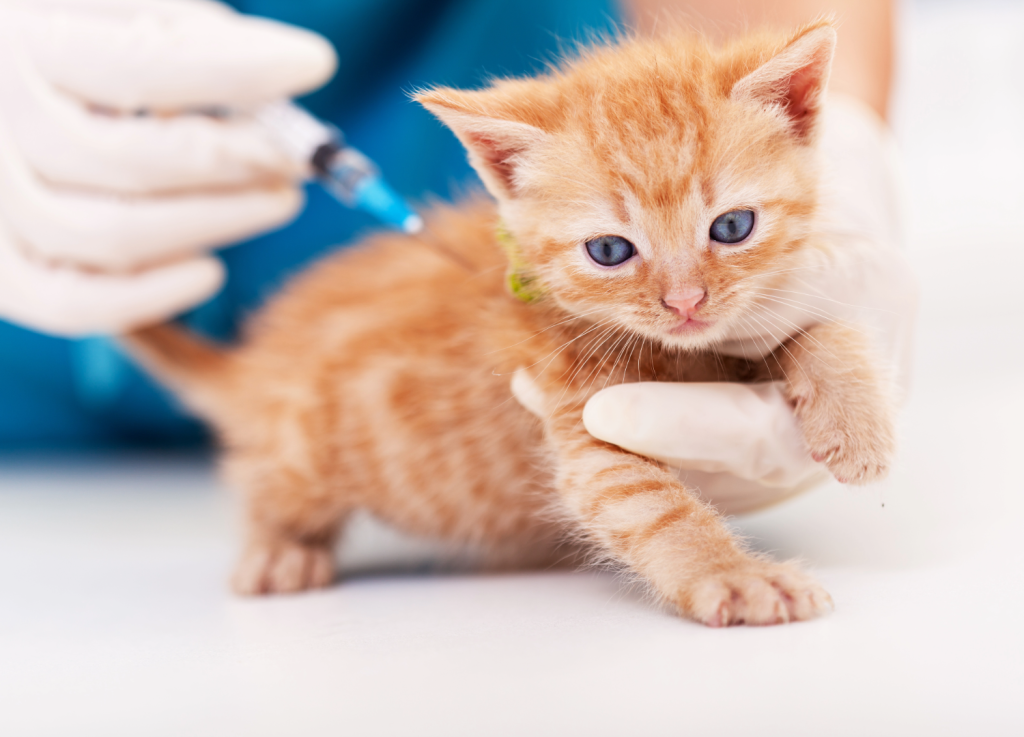
Vaccine schedules can be complicated and confusing. Many options for vaccines depend on the lifestyle for your cat and on any medical problems as well.
This is a herpes virus and is part of the “Upper Respiratory Complex”. It can cause fever, anorexia, sneezing, discharge from the nose and/or eyes and coughing. This virus will remain in the cat’s body for the rest of its life and later cause disease of the cornea or reoccurrence of other symptoms.
This is a calicivirus and is another part of the “Upper Respiratory Complex”. It attacks the lungs often causing pneumonia. It can cause fever and ulcers on the tongue, lips and mouth. It is often complicated by other infections and can be fatal.
Also called “Feline Distemper” or enteritis, this parvovirus reduces white blood cells needed to fight infection. Symptoms include severe diarrhea, vomiting, appetite loss, depression, and high fever. While highly contagious and often fatal, survivors typically recover fully. Vaccination effectively prevents this disease.
The FeLV (Feline Leukemia Virus) vaccine is administered at 12 weeks of age, followed by a booster at 16 weeks, and then continued annually as recommended. Feline Leukemia Virus affects a cat’s bone marrow, impairing the immune system and reducing the ability to fight infection. This vaccine is a crucial, generally safe, and highly recommended preventative for kittens and cats with outdoor access. It helps protect against a fatal, incurable virus that causes immunosuppression and is often considered a “core” vaccine for young cats, as well as any cat exposed to new or unfamiliar cats.
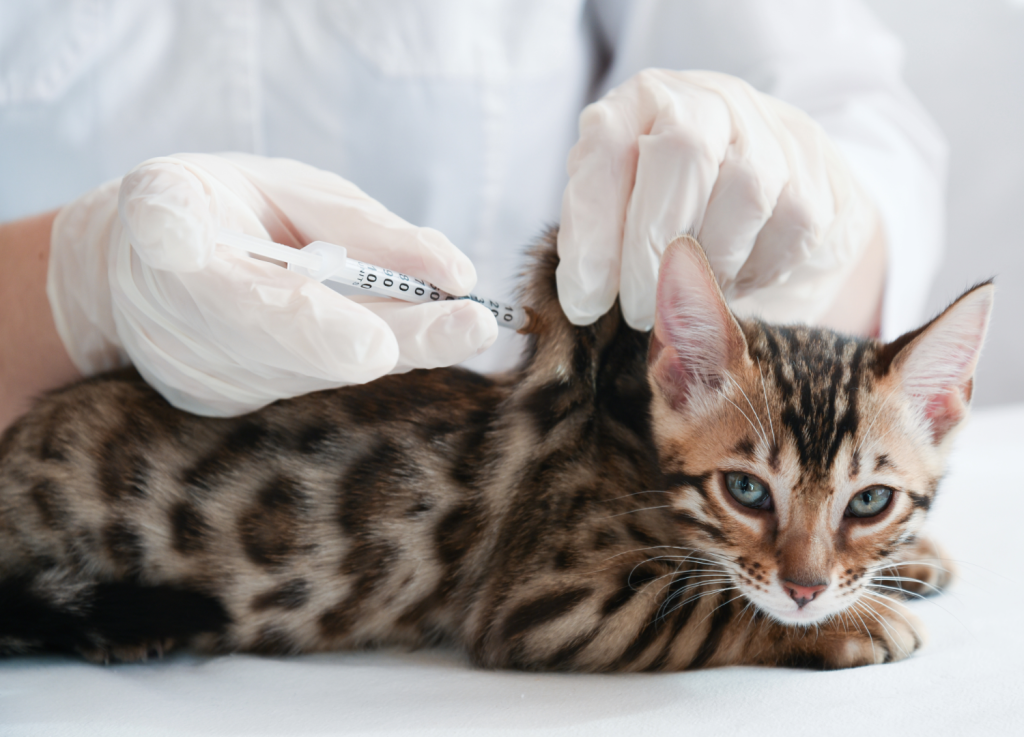
Rabies is a serious and life‑threatening disease transmitted through saliva, most commonly via bite wounds or contact between saliva and open wounds. It can infect all warm‑blooded animals, including humans. Also known as hydrophobia, rabies affects the central nervous system by attacking brain cells, resulting in severe neurologic symptoms. The incubation period—from exposure to the onset of symptoms—is typically three to six weeks but may extend up to six months. Once symptoms appear, rabies is always fatal and cannot be treated.
Rabies vaccination is required by law in many states, including Minnesota (Minnesota Rules Part 1721.0500). Rabies vaccines are available in one‑year and three‑year formulations. The initial vaccination is always a one‑year vaccine, and subsequent boosters may be administered as three‑year vaccines, provided they are given within 365 days of the initial dose.

Vaccine schedules can be complicated and confusing. Many options for vaccines depend on the lifestyle for your dog and on any medical problems as well.
Distemper is a prevalent, highly contagious disease which can be carried by raccoons. This disease is a paramyxovirus, which is similar to human measles. Initially, infected dogs will develop watery to pus-like discharge from their eyes. They then develop fever, poor appetite, nasal discharge, coughing, vomiting, diarrhea, and lethargy. As the virus attacks the nervous system, infected dogs develop circling behavior, head tilt, muscle twitches, convulsions with jaw chewing movements and salivation, seizures, and partial or complete paralysis. Distemper is often fatal, and dogs that survive usually have permanent, irreparable nervous system damage. It is transmitted mainly through saliva but can be potentially transmitted through any secretion.
This disease primarily causes liver failure but can also affect the eyes and kidneys. The symptoms can include dry, hacking cough, retching and gagging, fever, nasal discharge, vomiting, diarrhea, changes in the cornea of the eye and even death. It is spread directly from dog to dog through infected respiratory secretions or by contact with contaminated feces or urine.
The parainfluenza virus in one of several agents that can be part of the tracheobronchitis (kennel cough) disease. This virus causes mild disease unless combined with another virus or the Bordetella bacteria. It causes a dry hacking cough and watery nasal discharge but can progress to pneumonia. If left untreated, it can even cause death. It is transmitted by saliva and nasal discharge.
Parvo is widespread, highly contagious virus that often results in death. Symptoms include lethargy, loss of appetite, bloating, fever, vomiting, severe, often bloody diarrhea, and dehydration. Most deaths occur within 48 to 72 hours following the onset of clinical signs. If your puppy or dog shows any of these signs, you should contact your Veterinarian immediately. It is transmitted through feces. This virus is very hardy and can live in the environment for months under the right conditions.
This is a bacterium that is found in many types of outdoor environments, with over 200+ strains. The vaccine does not cross-protect (basically each strain needs its own vaccine). It spreads throughout the entire body targeting the liver, kidneys, central nervous system, eyes, and reproductive system. The signs and symptoms may include shivering, muscle tenderness, reluctance to move, lethargy, fever, lack of appetite, vomiting, diarrhea, and increased drinking/urination. The disease can cause kidney and/or liver failure. Permanent kidney damage or death can also occur. It is transmitted through urine, with contaminated water a likely source. Leptospira Spirochete bacteria is a zoonotic, meaning it can be transmitted to humans and other animals.
Lyme disease, also known as Lyme borreliosis, is a bacterial illness that can be transmitted to humans, dogs and other animals by certain species of ticks. It is caused by the spiral-shaped bacterium Borrelia burgdorferi that is carried inside a tick and gets into a dog’s bloodstream through a tick bite. Once in the bloodstream, the bacteria can travel to different parts of the body and cause problems in specific organs or locations, such as joints, as well as overall illness. Signs and symptoms include fever, loss of appetite, reduced energy, lameness (can be shifting, intermittent, and recurring), generalized stiffness, discomfort, or pain, and even swelling of joints. Symptoms can progress to kidney failure, which can be fatal. Serious cardiac and neurological effects can also occur.
Rabies is a serious and life‑threatening disease transmitted through saliva, most commonly via bite wounds or contact between saliva and open wounds. It can infect all warm‑blooded animals, including humans. Also known as hydrophobia, rabies affects the central nervous system by attacking brain cells, resulting in severe neurologic symptoms. The incubation period—from exposure to the onset of symptoms—is typically three to six weeks but may extend up to six months. Once symptoms appear, rabies is always fatal and cannot be treated.
Rabies vaccination is required by law in many states, including Minnesota (Minnesota Rules Part 1721.0500). Rabies vaccines are available in one‑year and three‑year formulations. The initial vaccination is always a one‑year vaccine, and subsequent boosters may be administered as three‑year vaccines, provided they are given within 365 days of the initial dose.
This vaccine is based on lifestyle and exposure: Bordetella – done yearly for those dogs boarded and groomed.
Which diseases do these vaccines treat?
Bordetella (also known as Kennel Cough) – This disease is usually caused by more than one virus and/or bacteria. Usually, Bordetella bacteria and Parainfluenza virus are the main culprits. However, Herpes virus, Distemper and several other viruses can also be involved. The disease is spread by nasal discharge or fomites. This vaccine goes into the nose instead of being injected under the skin.